The Permanence of Temporary Solutions
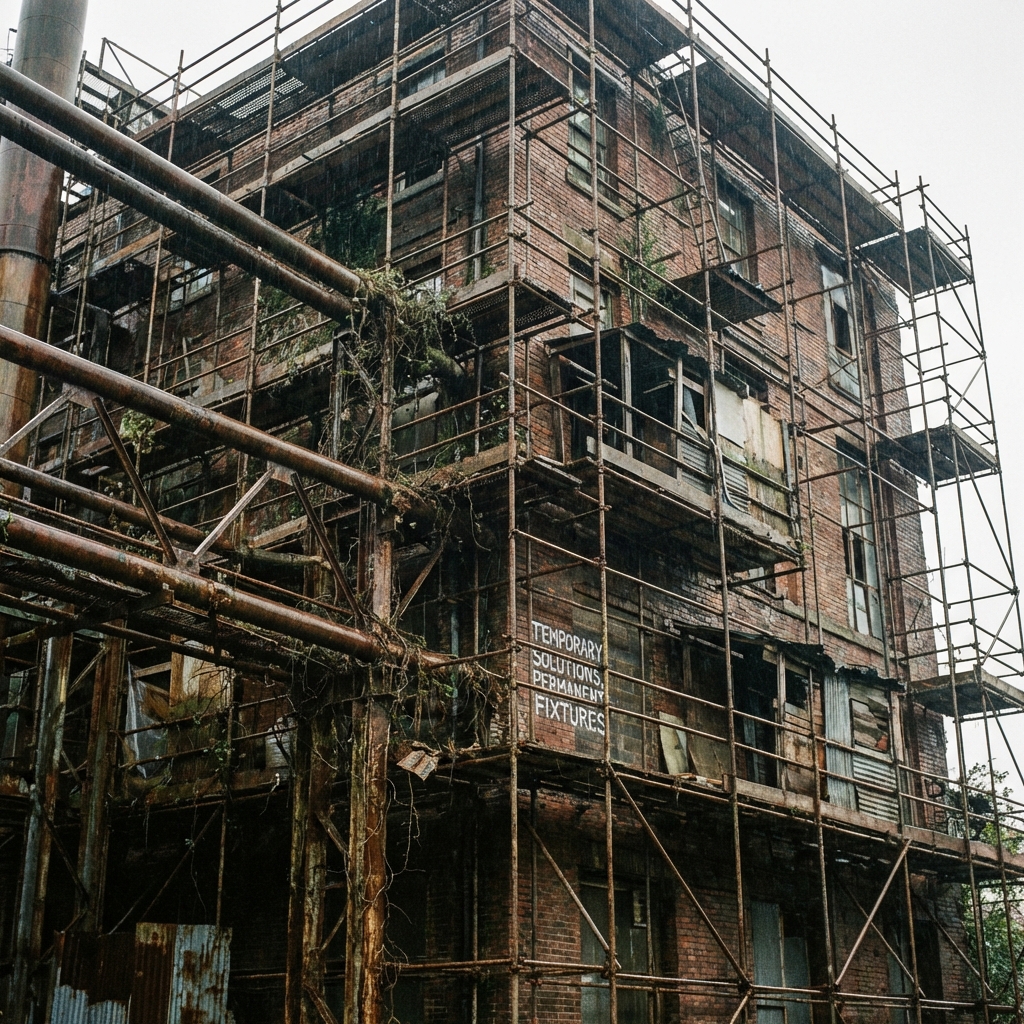
We all promise ourselves that the duct tape is coming off "as soon as this sprint ends." Then the sprint slips, the outage passes, other priorities shout louder, and the "just for now" patch becomes the load-bearing part of the system. The longer it holds, the more everyone begins to treat it like a design choice instead of a stopgap. Before long, the temporary fix that saved the day is the constraint suffocating tomorrow.
Temporary solutions aren’t inherently reckless. In moments of crisis they keep revenue flowing, unblock teammates, and let customers keep trusting us. The danger lies in letting the adrenaline fade without honoring the IOU we took out on the future. If we don’t deliberately retire the patch, it hardens into technical debt that future projects must tiptoe around.
The Hidden Trap of Quick Fixes
Short-term patches are almost always rational in context. They collapse decision-making cycles, limit blast radius, and buy the team breathing room. But the moment a workaround stabilizes production, it gains legitimacy. People start building features on top of it. Integrations depend on the edge cases it introduces. Documentation quietly rebrands it as "the way it works."
Every additional dependency increases the cost of undoing the fix. When the team finally circles back, they are no longer replacing a small shim; they are performing open-heart surgery on a living product. That is when the temporary choice reveals its true cost.
When "Temporary" Becomes Permanent
The worst technical debt rarely comes from incompetence. It comes from smart people making the best call they could at the time, and then never making time to revisit it. The initial decision is rarely the failure; the failure is treating the patch as complete.
Once a workaround becomes part of the foundation, everything layered on top of it inherits its limitations. Performance optimizations stall because no one wants to touch the brittle section. Platform migrations stall because the workaround is deeply knitinto the deployment process. Innovation slows to the pace of the weakest assumption.
Guardrails Against the Permanent Patch
Preventing a short-term fix from becoming a long-term anchor requires visible friction. That starts by labeling the solution for what it is: temporary. Leave comments, add TODOs, open tickets, and mark them as blockers for future work. The goal is to make forgetting impossible.
Document the intent. Capture why the decision was made, what risk it mitigated, and what conditions should trigger its replacement. Without that context, future maintainers will assume the workaround reflects deliberate architecture, not a triage moment.
Finally, schedule its death. Put the real fix on the roadmap, not as "tech debt someday" but as part of the original decision's cost. Treating the cleanup as optional guarantees it will never happen. Treating it as a deliverable ensures the team budgets time, resources, and focus.
The Real Lesson
Temporary solutions will always exist. They are part of moving fast, serving users, and surviving chaotic moments. The danger isn’t shipping them, it’s forgetting they ever were temporary.
Teams that pair urgency with discipline keep their systems flexible. They retire patches before they fossilize, preserve engineering velocity, and ensure the architecture evolves on purpose instead of by accident. Kill your temporary solutions while you still can. Otherwise, they’ll outlive us all.
Need senior engineering leadership?
Engage a partner-led engineering firm that agrees on fixed fees, written scope, and accountability for outcomes instead of hours.
Access to semperMade's services is highly selective and subject to approval.